
Neuroscience is redefining the way brands communicate with consumers. In recent…
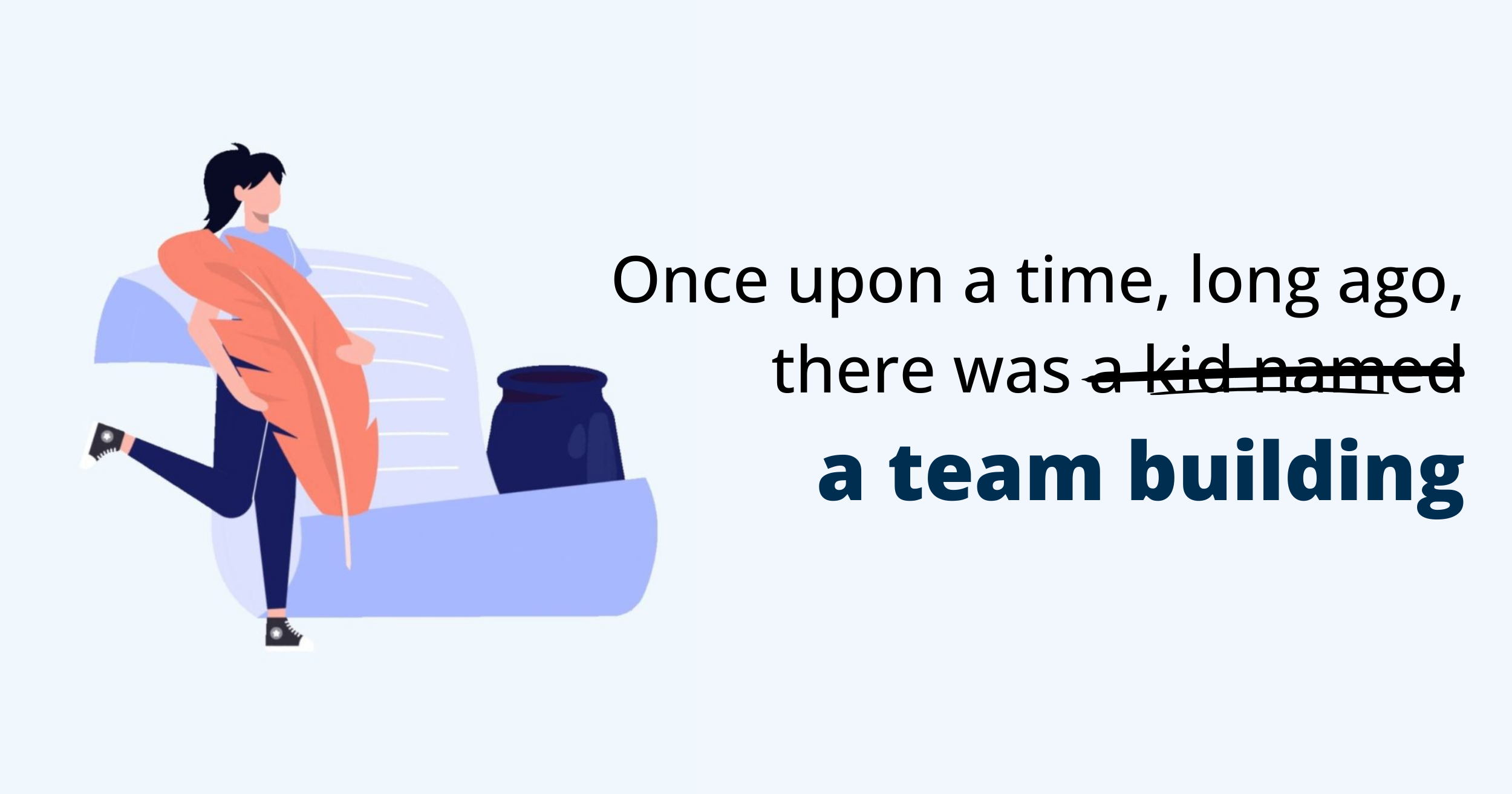
Once upon a time, long ago, there was a team building
When we are children, stories feel as essential as food and affection; we experience them as a vital need.
If we are prevented from inventing stories, from losing ourselves in imaginary worlds, or from picturing forests, wild animals or cats in big boots, we suffer a deep loss and limitation – for both our emotions and our development. And as adults?
Adulthood makes everything more complicated: responsibilities arrive, bills to pay, schedules to keep, deadlines to meet.
Even in our sleep – when our mind should rest, switch off from everyday worries and recharge so we can face a new day – dreams often turn into unpleasant scenarios and twisted projections of our daily fears.
If even our brain, after centuries of evolution, seems to suggest that we should not fully disconnect from waking life, not even when we sleep, do we still need stories, moments where imagination takes the lead and reality steps aside?
In his essay How the Mind Works, cognitive scientist Steven Pinker argues that stories provide us with a mental archive of complex situations we might one day face, along with a range of possible ways to respond.
Of course, applying fictional solutions literally to real life would turn us all into comic‑book Don Quixotes, but their educational and experiential value is undeniably high.
So yes, we do need stories rich in meaning, fairy tales with characters that go beyond normality, narratives that help us exorcise our fears, train empathy and understanding, and show us the value of collaboration.
And if those stories do not exist, then it is time to write them ourselves.
A few months ago, our colleagues based in Marsala received a request from a company in Arenzano, Liguria: to design a team building activity capable of stimulating empathy, mutual listening and communication – something that would help around 40 people improve how they understand one another and work both on themselves and on others’ needs.
During the initial call, someone mentioned the word “fairy tale”, and that’s when everything started to take shape.
Six characters in search of an author
Once the PowerPoint presentation was on, everyone was seated and a bit of small talk had broken the ice, participants were split into six teams of six.
Each team received a mystery box and a small booklet with some information sheets.
One of these contained the same opening for everyone: the beginning of the Little Red Riding Hood fairy tale.
Then, suddenly, the text stopped and gave way to blank pages.
At that point, a new character – different for each group – would burst into the story.
Participants were asked to step into this character’s shoes, bring them into the scene and write the rest of the story.
How? By practising empathy and active listening, and by changing their point of view on both the characters and the story itself.
The mystery box contained a set of props to help people get into character and act out the story, using different areas of the venue as their stage.
Einstein, Freud, Rasputin, Jessica Rabbit, Marie Antoinette and Mata Hari were the six characters in search of authors able to give them a new story to live – as well as a good reason to find themselves inside a fairy tale with a girl in red, a grandmother on her way to becoming a difficult‑to‑digest meal and a wolf who clearly does not know the hunting season dates.
The day unfolded through laughter, quiet moments of reflection, exercises in role‑playing and a little theatre and writing practice, leading to six unique stories.
Each one represented not only the characters being played, but also the authors themselves, who ended up putting into play their most childlike, pure, playful and imaginative side.
Epilogue
In his book The Storytelling Animal, essayist and literary theorist Jonathan Gottschall writes: “Fiction, expressed through any narrative medium, is an ancient and powerful virtual‑reality technology that simulates life’s big dilemmas. […] We identify so intensely with protagonists’ struggles that we do not simply feel sympathy; we develop strong empathy for them. We feel their joy, desire and fear; our brain lights up as if what is happening to them were actually happening to us. The constant activation of our neurons in response to narrative fiction strengthens and reshapes the neural pathways that help us navigate life’s challenges competently.”
Would you ever have thought that imagining Rasputin in the woods with Little Red Riding Hood would teach you to be more empathetic, to communicate better with those around you, and give you the opportunity to experience crisis situations in complete safety?
Imagination, creativity and the ability to put ourselves in someone else’s shoes are extremely powerful tools.
If we want to build a solid team and a healthy, stimulating work environment, we should never forget them.
Altre News
This Post Has 0 Comments